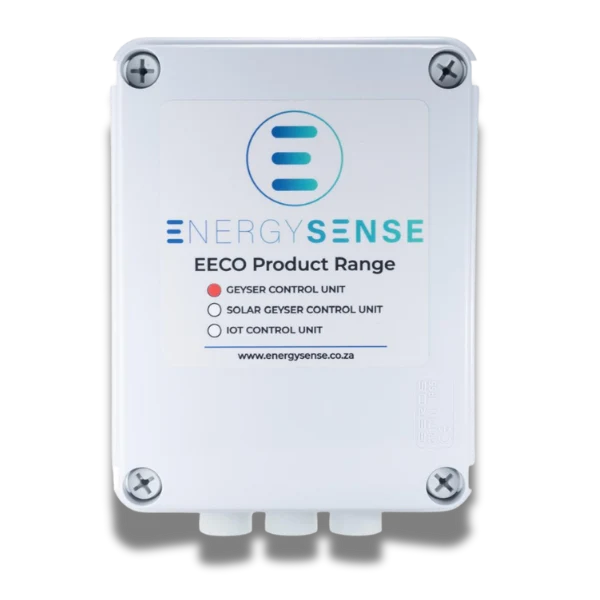
The Energy Sense GCU is a smart geyser controller that lets you schedule, monitor and protect your electric geyser. It helps reduce wasted electricity, prevent overheating, and warn you early when your geyser or element may not be performing as it should.
Designed for South African homes facing high electricity prices and load shedding, the GCU gives you reliable hot water while reducing wasted power.
In many South African homes, water heating is one of the largest electricity users. Control your geyser, and you control one of the biggest parts of your energy bill.
Compatible Geyser Types
GCU (Geyser Control Unit)
- Works with most standard electric geysers (tank + element)
- Supports common sizes: 100L, 150L, 200L
- Can be installed indoors or outdoors (IP65-rated enclosure)
SGCU (Solar Geyser Control Unit)
- Works with most solar geyser systems that use a conventional electric geyser, solar collector, and 12V DC circulation pump
- Supports standard geyser sizes and both retrofit and new installations
- Suitable for indoor or outdoor mounting (IP65-rated enclosure)
- Optional backup solar panel and battery support keeps the controller and pump running during load shedding
Take true control of your geyser use
Most South African homes waste electricity because geysers heat when no one needs hot water, stay on too long, or rely on fixed thermostats. This drives up your electricity bill and wears out your element faster.
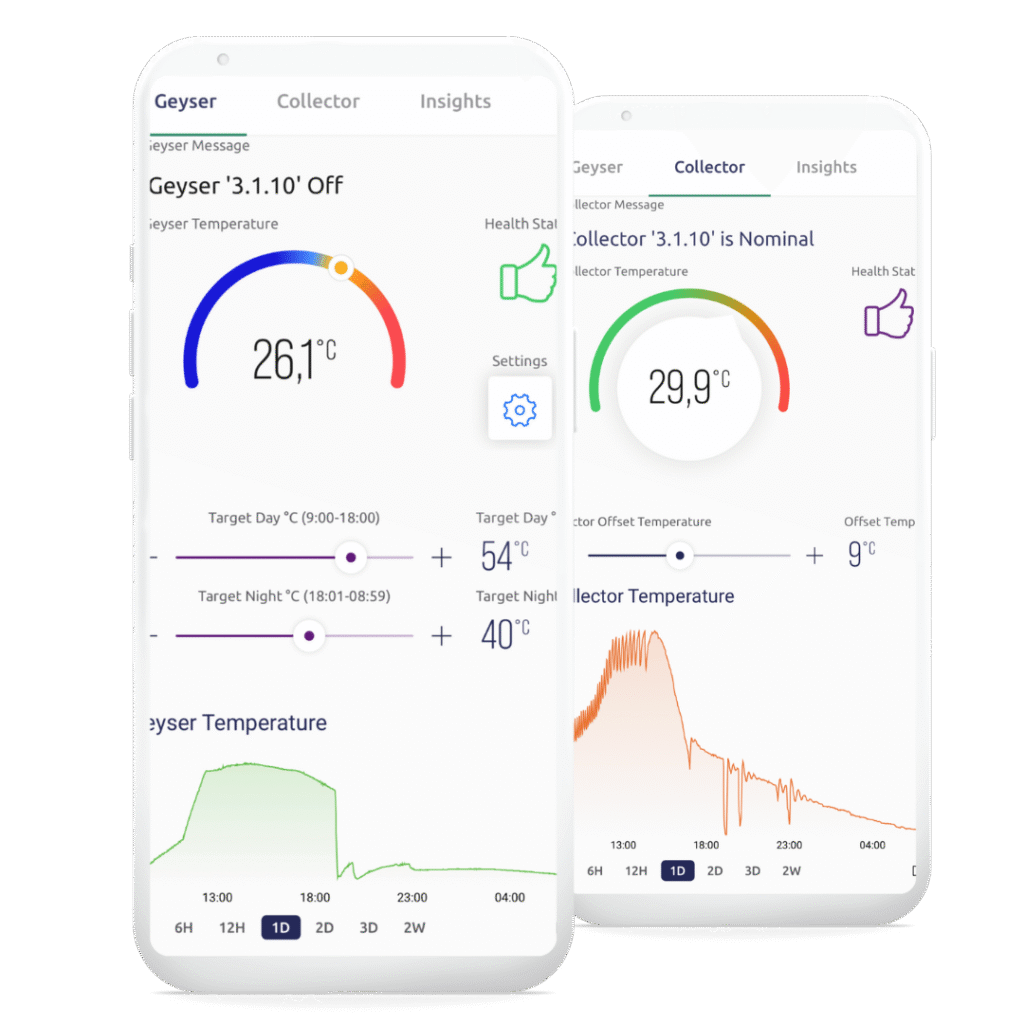
With the Energy Sense GCU, your geyser heats only when it should, using smart scheduling, float temperature control, and real-time temperature monitoring. You also get early warnings when the element starts failing, optional leak detection on supported units, and automatic recovery after load shedding. All while lowering your energy costs and giving you full control through the Energy Sense app.
Geyser Control Unit (GCU) Features
The Energy Sense GCU gives you smart control of your electric geyser with real-time temperature monitoring, remote app control, and intelligent heating schedules. It helps you reduce electricity usage, protect your element against overheating, and enjoy reliable hot water. Built for South Africans facing high electricity tariffs and load shedding.
- Smart WiFi Connectivity - Control your geyser from anywhere using the Energy Sense app or web dashboard
- Flexible Scheduling – Set up to six heating schedules for comfort while reducing unnecessary electricity usage
- Real-Time Temperature Monitoring – See your geyser’s live water temperature and track changes throughout the day
- Safe Heating Control – Built-in logic helps prevent overheating and reduces unnecessary on/off cycling
- Load-Shedding Auto-Recovery – Heating automatically resumes when power returns and your active schedule is still in effect
- Holiday & Away Modes – Reduce or disable heating while you’re not home
- Usage Tracking – View daily and weekly heating activity, runtime, and patterns
- Instant Alerts – Get real-time notifications for heating status, temperature updates, and system warnings
- Remote Management – Turn the geyser on/off, adjust schedules, and check temperature from anywhere
Advanced GCU Features*
- HeatBoost Mode – A fast, controlled heating cycle that warms water quickly when needed
- Geyser Efficiency Score – Smart analytics that score each heating cycle and highlight wasted energy
- Advanced Cost Tracking – Compare float heating vs timer heating, track true daily costs and weekly trends
- Early Element Failure Detection – Detects unusual temperature rise patterns that indicate a failing or scaled element
- Leak Detection (hardware supported units only) – Optional wired leak sensor for early warning and auto-shutdown
* Available on supported hardware and firmware versions. Some features require newer GCU hardware or additional sensors
Choose the Right Geyser Control for Your Home (Normal vs Solar)
| Feature | Geyser Control Unit (GCU) | Solar Geyser Control Unit (SGCU) |
|---|---|---|
| Smart WiFi connectivity | ✔ | ✔ |
| Electric geysers | ✔ (primary heating) | ✔ (backup element) |
| Compatible with solar collector systems | ✖ | ✔ |
| Solar collector temperature monitoring | ✖ | ✔ |
| Geyser water temperature monitoring | ✔ | ✔ |
| DC pump control (12V circulation) | ✖ | ✔ |
| Solar collector → geyser transfer logic | ✖ | ✔ |
| Remote scheduling (6 timers) | ✔ | ✔ |
| Day & night temperature profiles | ✔ | ✔ |
| Automations / advanced rules | ✔ | ✔ |
| Holiday / away mode | ✔ | ✔ |
| Load shedding auto-recovery | ✔ | ✔ |
| Float temperature setpoint | ✔ | ✔ |
| Self-diagnostic checks | ✔ | ✔ |
| Winter freeze-protection (collector protection) | ✖ | ✔ |
| Automatic winter collector offset adjustment | ✖ | ✔ |
| Optional backup solar panel + battery operation * | ✖ | ✔ * |
| Leak detection (optional sensor) * | ✔ * | ✔ * |
| Notifications (phone / email) | ✔ | ✔ |
| Advanced cost tracking | ✔ ** | ✔ ** |
| HeatBoost Mode | ✔ ** | ✔ ** |
| Geyser Efficiency Score | ✔ ** | ✔ ** |
| Post-heating status feedback (Normal / Fast / Slow) | ✔ ** | ✔ ** |
| Bulk / fleet management for complexes | ✔ (master on/off, bulk schedule changes) | ✔ (master on/off, bulk schedule changes) |
* Backup solar panel and battery operation requires the SGCU backup kit and compatible hardware
* Leak detection requires supported hardware and a separate leak sensor
** Available on supported hardware and firmware versions. Some features require newer GCU hardware or additional sensors
Why Do Geysers Fail?
Geysers often fail because of a combination of age, heat stress, and water quality issues. The most common causes include:
- Age and metal fatigue – Most geysers have a service life of around 10 years. Over time, the inner tank weakens, welds fatigue, and corrosion accelerates, increasing the risk of leaks or burst failures
- Corrosion and internal rust – Metal tanks weaken over time, especially when the sacrificial anode is worn out or missing, eventually leading to leaks
- Anode depletion – The sacrificial anode (usually magnesium or aluminium) protects the tank from internal rust. Once it dissolves and is not replaced, the tank is left exposed to corrosion and will eventually fail
- Sediment and mineral build-up – Hard water causes scale to form on the element and inside the tank, reducing efficiency, trapping heat, and overheating components
- High water pressure – Excessive pressure stresses the tank, valves, and seals, increasing the risk of leaks or burst geysers
- Element failure – Worn or scaled elements heat slowly, use more electricity, and eventually burn out
- Faulty or overheated thermostats – Thermostats stuck on high can cause continuous heating, excessive energy use, and early element damage
- Pressure relief valve failure – A stuck or leaking valve prevents safe pressure release, raising the risk of catastrophic failure
- Electrical supply issues – Unstable voltage, poor wiring, or intermittent power can cause irregular heating cycles and wear on components
- Lack of maintenance – Without routine inspections, early warning signs like scale, leaks, and corrosion go unnoticed until a major failure occurs
How the Energy Sense GCU Helps Protect Your Geyser
The Energy Sense GCU cannot repair a corroded or damaged geyser, but it can help reduce unnecessary heating, monitor real-time temperature, track heating performance, support leak detection on compatible units, and alert you when your geyser is not behaving as expected